What Gen Z Can Learn From Life Before Everything Was Online

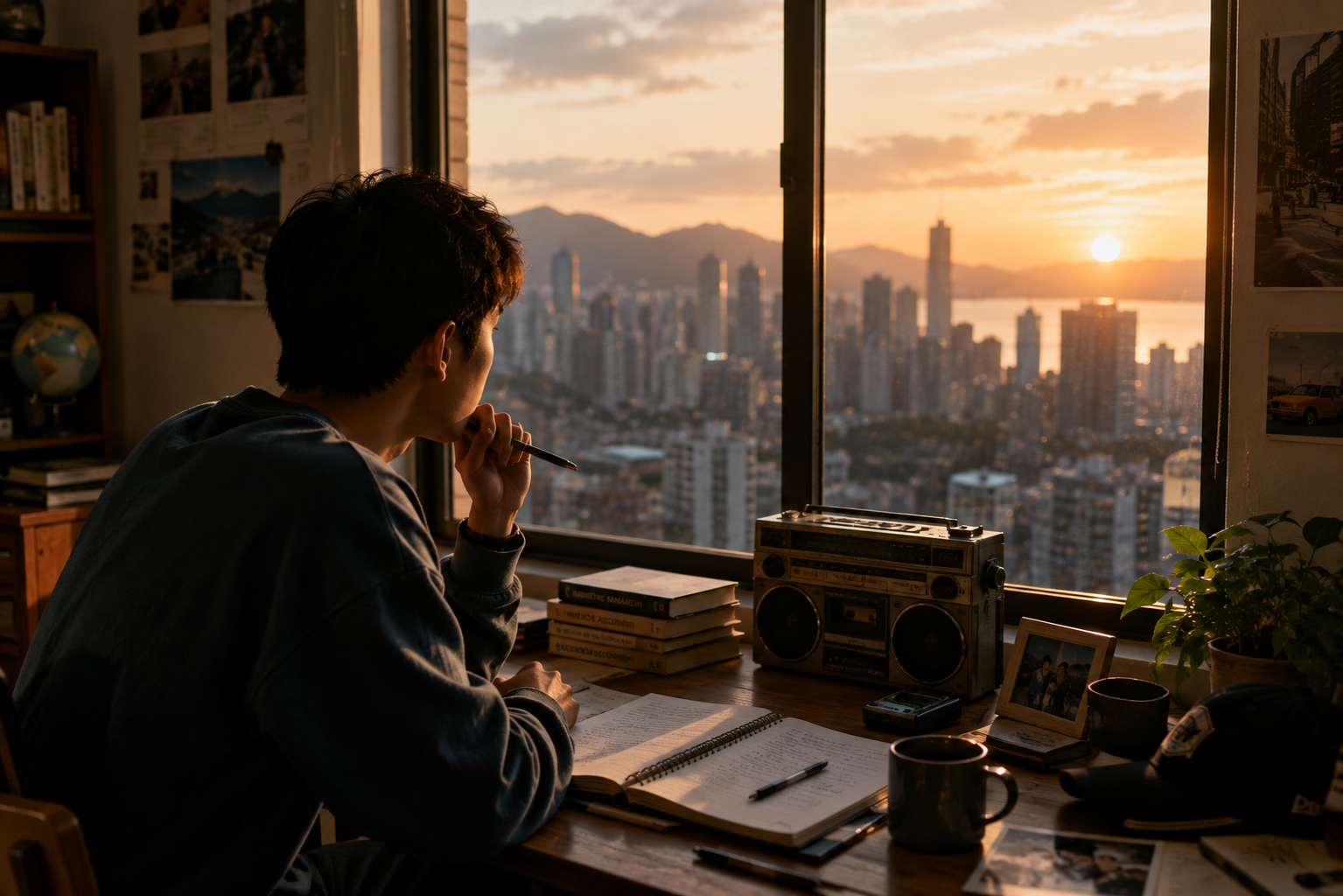
I sometimes wonder what the early 1990s would feel like to someone in their twenties today. People worried about careers, relationships, money and the future just as they do now, and we were no more certain about our choices than young people are today. What was different was the environment in which those choices were made, particularly the amount of information competing for our attention.
Information once had natural stopping points. The newspaper ended, the evening news finished and the office eventually closed. There was no smartphone beside the bed offering another headline, opinion or update, and very little expectation that we should know what was happening everywhere at once. Today, information has no closing time, which makes deciding when we have heard enough a skill in itself.
The same is true of comparison. We have always compared ourselves with other people, but in the early 1990s the circle was relatively small. You might know that a friend had received a promotion or bought a house, but you weren't exposed throughout the day to hundreds of careers, holidays, relationships and achievements. A person today can feel behind without anything in their own life having changed, simply because they have been shown so many other lives against which to measure it.
There was also more privacy in becoming yourself. Your twenties are naturally a period of changing interests, ambitions and opinions, but most of our earlier versions simply disappeared with time. There was no permanent archive of photographs, comments and half-formed thoughts following us into the future. That allowed people to experiment with who they were without feeling that every stage had become part of a public record.
Boredom occupied more space as well. Waiting for someone meant waiting, a journey could involve staring out of a window, and standing in a queue offered little entertainment beyond your own thoughts. I certainly didn't regard boredom as a gift at the time, but I now think there was value in having parts of the day that demanded nothing from us. Ideas sometimes appeared precisely because there was nothing more interesting available to interrupt them.
Our relationships with other people were shaped differently by technology too. If you arranged to meet someone, you made the arrangement beforehand and generally kept it. Once someone left home or the office, they might be unreachable for several hours, and nobody found that particularly remarkable. Constant contact has made relationships easier to maintain across distance, but it has also created a new assumption that availability and attentiveness are the same thing.
Perhaps the greatest difference was how we dealt with uncertainty. If you were considering a job, moving to another city or making a business decision, there was only so much research available. Eventually the information ran out, and you had to decide. The decision might turn out to be wrong, but there was no illusion that enough searching could remove every element of doubt.
That limit has largely disappeared. There is always another article, review, video, podcast or opinion to consult, and artificial intelligence can now produce another analysis almost instantly. This is an extraordinary advantage, but abundance introduces its own problem: we can continue gathering information long after it has stopped improving the decision. Knowing when to stop researching and start relying on judgement may become more important as our tools become better at supplying endless answers.
Experience has also made me more comfortable with the fact that some knowledge only arrives after a decision has been made. You cannot completely research what it will feel like to live somewhere new, work with a particular group of people or pursue an unfamiliar opportunity. At some point, information gives way to experience, and experience tells you things that no amount of preparation could have supplied beforehand.
I would not exchange today's world for the early 1990s. Instant communication, access to knowledge and the ability to remain connected across continents have expanded what an individual can do in ways we could hardly have imagined. Nostalgia becomes misleading when it remembers the peace of an earlier period but forgets the inconvenience, limited choices and barriers that came with it.
What interests me instead is that many things my generation received by default now have to be chosen deliberately. We did not decide to spend time without screens, know less about other people's lives or occasionally become unreachable; the technology simply gave us no alternative. A younger generation has the harder task of deciding for itself where those boundaries should be.
That question will become more important, not less. Artificial intelligence will make information more abundant, devices will become less visible and more integrated into everyday life, and the distinction between being online and offline may eventually disappear altogether.
The opportunity for the next generation will not be to recreate the slower world of the early 1990s, but to combine the extraordinary capabilities of the future with a few things the past taught us almost by accident: that attention is finite, uncertainty is unavoidable, privacy has value and sometimes the clearest thought begins when nothing else is demanding to be heard.