Why I Keep Choosing to Be a Beginner

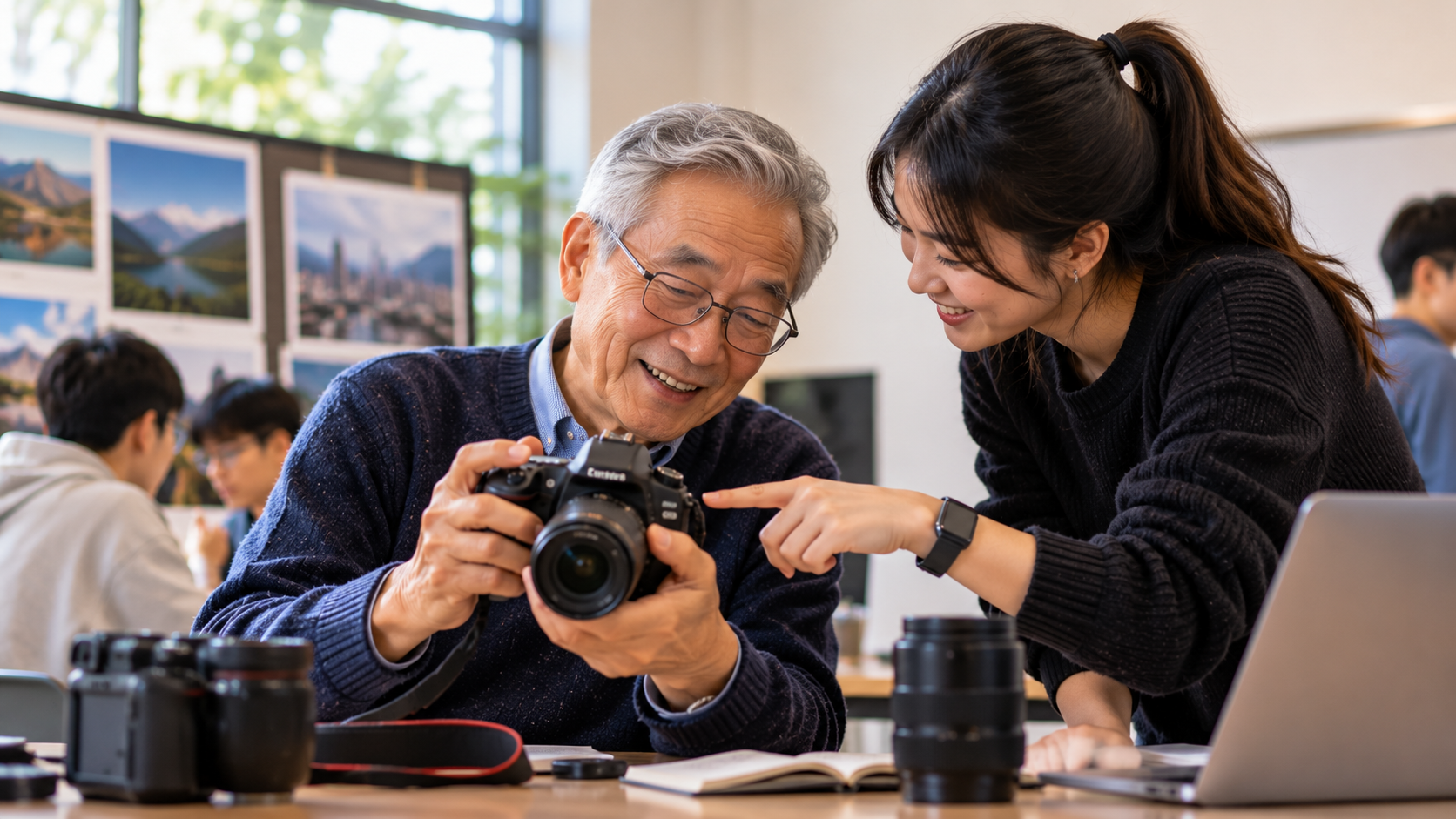
There is a particular feeling that comes with being the least skilled person in the room. Your hands don't do what you want them to. Everyone else seems to know the right words for things. You ask a question and realise halfway through that it is the kind of question a child might ask. Most of us spend our working lives trying to get away from that feeling, and by our sixties many of us have managed it. We know our field, people listen when we speak, and we are rarely shown how to do anything.
I have come to think that this comfort is one of the quiet risks of getting older.
Photography is where I still feel like a beginner. It humbles me regularly: light that won't behave, settings I have forgotten, a shot I was sure about that turns out to be blurred. A younger photographer can look at my pictures and see in a second what I spent an hour failing to notice. It isn't always comfortable, but I have learned to value it.
There is good science behind that instinct. The psychologist Denise Park and her colleagues at the University of Texas at Dallas ran a study called the Synapse Project, published in Psychological Science in 2014. They recruited 221 adults aged between 60 and 90 and asked each of them to commit 15 hours a week for three months to a set activity. Some learned digital photography and editing software. Some learned to quilt on computer-controlled sewing machines. Some divided their time between the two. Others joined a social group that played games, told stories and visited museums together, or worked at home on gentle tasks such as listening to music and doing easy word puzzles.
At the end of the three months, the groups learning demanding new skills, particularly photography, showed significant gains in memory. The social and at-home groups had been busy and engaged, but they hadn't been stretched, and they didn't show the same improvement. Park summed up the finding in one sentence: "When you are inside your comfort zone you may be outside of the enhancement zone."
That line has stayed with me, because comfort is exactly what experience offers us. The difficulty of being a beginner later in life is rarely about ability. It is about pride. The more senior we become, the less often anyone sees us struggle, and the less willing we are to let them. Someone who has chaired meetings for thirty years does not always enjoy being corrected by a twenty-five-year-old instructor. It is easier to stick to what we already do well, to call that wisdom, and to fill our days with activities that keep us occupied without asking much of us. Crosswords and brain-training apps have their place, but once we have mastered them they become one more comfort zone.
So what does it look like to choose being a beginner? A few habits have helped me.
The first is to pick something with a real learning curve, where progress is slow enough that you notice it. A musical instrument, a language, a craft, or a sport with proper technique to it. If you are good at something within a week, it probably isn't stretching you.
The second is to learn alongside younger people. Classes, clubs and online communities mix generations in a way that most of our social lives no longer do. Younger learners are often quicker than we are, and they are usually generous with their help. Being taught by someone half your age is good for the memory and even better for the ego.
The third is to accept correction gracefully. Every time someone points out a mistake, we can either defend ourselves or say thank you. The second response is the one that keeps us learning.
The last is to keep some record of progress. I find it encouraging to look back at photographs from a few years ago and see what I would do differently now. Beginners need evidence that their effort is paying off, and at our age we are entitled to need it too.
Ageing gracefully is often described as a kind of acceptance: of slower bodies, changing roles and the passing of time. All of that matters. But I have come to see another side to it, which is a refusal to stop growing. The people I most admire in their seventies and eighties are not the ones who know everything. They are the ones who still ask questions, still sign up for things they might be bad at, and still laugh at their own mistakes.
Humility rarely appears on lists of healthy habits alongside exercise, sleep and a good diet. Perhaps it should. Being willing to be a beginner keeps the mind working, keeps us in touch with people outside our own generation, and keeps life interesting. I would much rather be a slightly embarrassed learner at seventy than an expert who stopped learning at sixty.