Living Longer, the Hong Kong Way

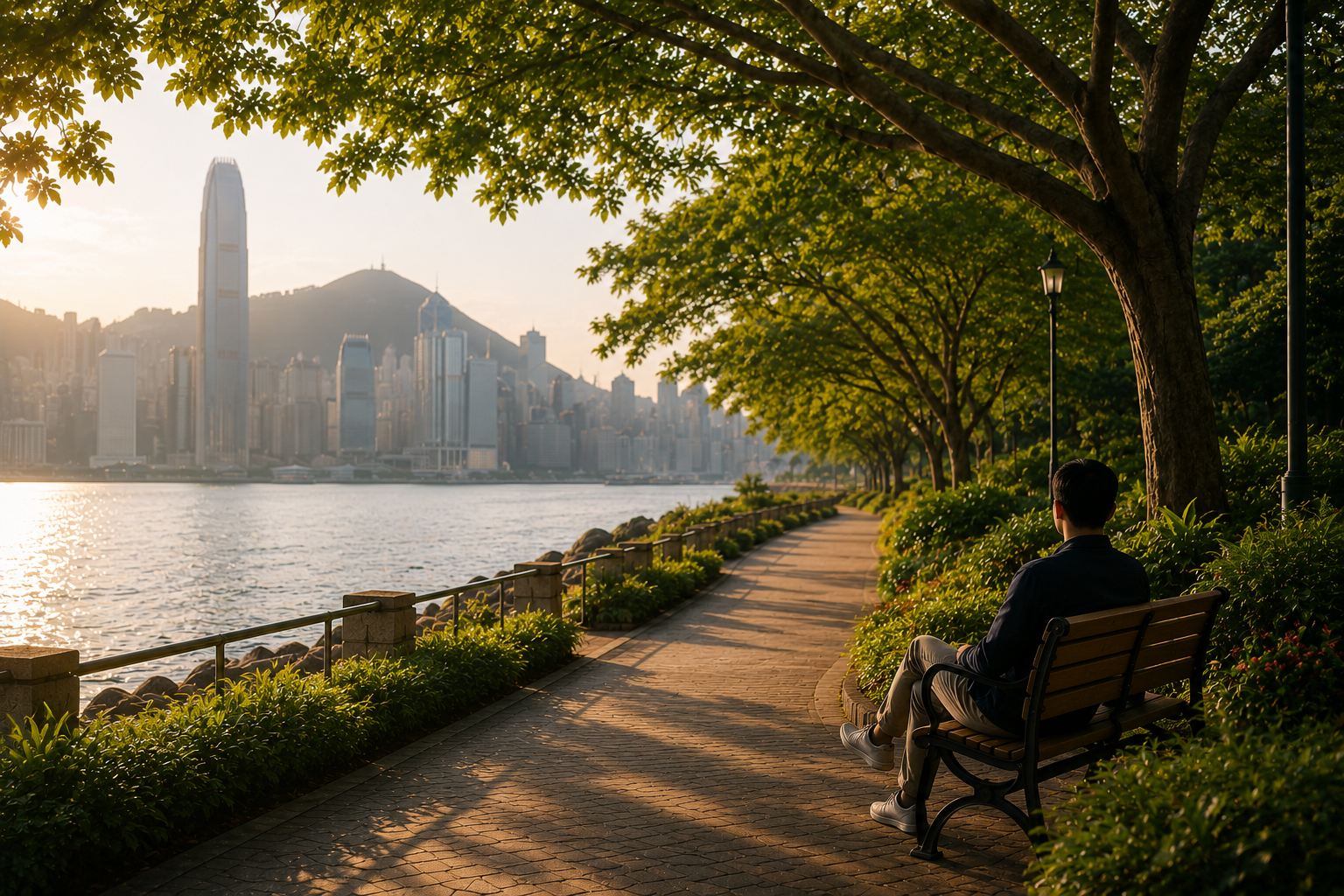
Hong Kong is home to one of the longest-lived populations in the world. Yet according to the latest government health survey, almost 97 per cent of adults consume fewer than the recommended five daily portions of fruit and vegetables. At first glance, those two facts seem impossible to reconcile. How can one of the world's longest-lived societies also fall short of one of the most familiar pieces of health advice?
Perhaps the question itself reveals something important. We often approach wellness as though it depends on discovering one perfect habit. A new diet promises longer life. A supplement claims to restore youthful vitality. The latest technology encourages us to monitor every heartbeat, every step and every hour of sleep. Modern wellness has become an endless search for optimisation, built around the hope that somewhere there exists a single breakthrough capable of transforming our health.
Reality is rarely so simple. The world's healthiest societies were not built by chasing perfection. They were shaped over generations by countless ordinary decisions, supportive communities and environments that quietly encouraged healthier ways of living. Good health is rarely the result of one dramatic change. More often, it reflects thousands of small choices that accumulate over a lifetime.
Hong Kong offers an interesting reminder of that truth. Life in Hong Kong has never been effortless. It is one of the world's busiest and most densely populated cities, where people navigate steep streets, crowded neighbourhoods and demanding careers. Yet those same characteristics have also helped create habits that support long-term health. Walking forms part of everyday life rather than a scheduled activity. Public transport encourages movement. Families often remain closely connected across generations. Access to healthcare is widespread, while education has long been recognised as an essential investment in society's future.
None of these factors alone explains Hong Kong's remarkable longevity. Together, however, they begin to tell a different story. Wellness is not simply a matter of personal discipline. It is also shaped by the communities we belong to, the opportunities available to us and the environments in which we live our daily lives.
This understanding has influenced the way I think about wellbeing. For many years, much of my work has focused on education. Education and wellness may appear to belong to different worlds, yet they share an important characteristic. Neither delivers its greatest benefits immediately. The value of both becomes apparent only through time.
When a young person receives a scholarship, the impact cannot be measured after a single semester. The knowledge they acquire gradually changes their confidence, broadens their horizons and opens opportunities that may continue unfolding for decades. Education is not an event. It is a lifelong investment in human potential.
Wellness follows a remarkably similar path. A balanced meal rarely transforms our health overnight. Neither does a morning walk or an earlier bedtime. Yet repeated consistently over many years, these seemingly ordinary choices shape the quality of our lives in profound ways. They influence not only how long we live, but how well we are able to learn, work, care for others and contribute to our communities.
That is why I have never regarded wellness as an individual pursuit alone. Healthy people build healthier societies. Parents with energy can remain actively involved in their children's lives. Teachers inspire future generations. Community leaders continue sharing their experience long after retirement. Grandparents remain present to witness family milestones that might otherwise have passed them by. Good health creates possibilities that extend far beyond the individual.
This perspective also changes the way we think about ageing. Too often, discussions about longevity focus almost exclusively on adding years to life. While increasing life expectancy is undoubtedly a remarkable achievement, the more meaningful question is how we choose to live those additional years. A longer life has the greatest value when it allows us to continue growing, learning and strengthening the relationships that give life its meaning.
Perhaps this is why I find the language of optimisation less inspiring than the language of stewardship.
Optimisation encourages us to ask how much more we can achieve for ourselves. Stewardship asks how we can preserve our capacity to contribute to others. One looks inward. The other recognises that our wellbeing is closely connected to the wellbeing of our families, our communities and future generations.
There is another lesson worth reflecting upon. Hong Kong's longevity reminds us that no society is perfect. The latest health survey also highlights challenges that continue to deserve attention, from dietary habits to other lifestyle risk factors. Long life should never lead to complacency. Instead, it should encourage us to keep asking how we can build communities that make healthier choices easier, more accessible and more sustainable for everyone.
The same principle applies to education. We do not educate children because we expect immediate results. We invest in them because we believe that patient, consistent support creates opportunities that extend throughout a lifetime. Wellness deserves the same long-term perspective. It is not built through dramatic resolutions or fleeting trends, but through steady investments in ourselves and in one another.
Perhaps that is the real lesson Hong Kong offers. Its success is not evidence of a single secret to longevity. Rather, it demonstrates the power of environments that encourage people to keep moving, keep learning, remain connected and continue contributing throughout their lives.
Living longer is certainly something to celebrate. Living well, however, has always been the greater achievement. It is measured not simply by the number of years we are given, but by the opportunities we create within them: to remain curious, to support those around us and to leave our communities stronger than we found them.
In the end, that may be the most meaningful definition of wellness. It is not about extending life for its own sake. It is about preserving our ability to make each stage of life purposeful, fulfilling and rich with possibilities.