Staying Young Is About More Than Age

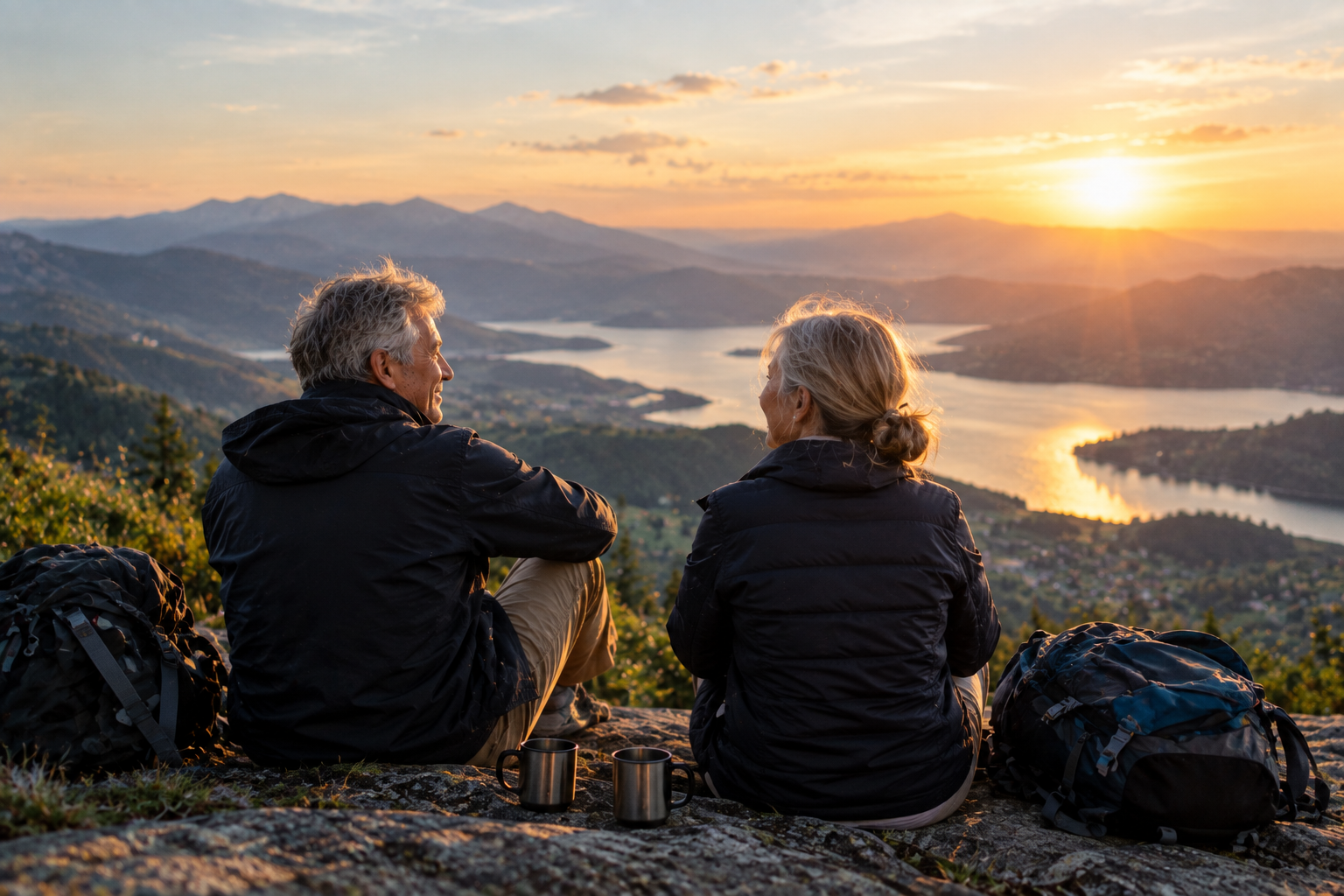
We spend a great deal of time trying to slow down the physical signs of getting older. We exercise, watch what we eat and pay more attention to our health than we probably did when we were twenty. All of that matters. But I have met people much younger than me who already seem tired of the world, and people well into their later years who still have an extraordinary appetite for life. The difference, I suspect, has less to do with the number of years they have lived than with how interested they remain in the years ahead.
For me, staying young means continuing to be curious. It means going somewhere you have never been, having dinner with someone who sees the world differently, learning something you are not particularly good at, or simply being willing to change your mind. As we get older, experience can become both an advantage and a trap. We know more, but that knowledge can make us too certain. We develop routines because we know what we like, but those routines can gradually make our lives smaller. There is comfort in familiarity, but there is also something very youthful about allowing yourself to be surprised.
Having Something to Look Forward To
I have always believed it is important to have something ahead of you that you are genuinely looking forward to. It does not have to be a major ambition. It could be a trip, a meal with old friends, a project you want to finish or simply somewhere you have wanted to visit. Anticipation is one of life's underrated pleasures. Sometimes the weeks spent looking forward to an experience are almost as enjoyable as the experience itself.
Perhaps that is why I have never understood the idea that at a certain age we are supposed to slow down completely. There is a difference between slowing down enough to appreciate life and withdrawing from it. I would rather continue making plans. I want reasons to get on an aeroplane, reasons to wake up early and reasons to wonder what next month or next year might bring. Staying young, in that sense, is partly about refusing to believe that all the interesting chapters are behind you.
Finding Happiness In the Simple Things
When we are younger, happiness can seem like something we are working towards. We tell ourselves that we will be happy when we reach a particular milestone: when the business succeeds, when we have enough money, when we buy the house, when we take the holiday, when life finally becomes less complicated. Then we reach one milestone and immediately invent another. It can take a long time to realise that happiness is not particularly good at waiting for us at the finish line.
These days, I find that many of the things that make me happiest are remarkably ordinary. A good meal. A conversation that lasts longer than expected. Seeing an old friend after too much time apart. Walking through a city without being in a hurry. Laughing at something completely ridiculous. Spending time with family without needing an occasion for it. None of these moments sounds especially impressive when written down, but perhaps that is precisely why they matter. A good life is made up mostly of ordinary days, so we should probably become better at enjoying them.
The People Around Us
I also think happiness becomes increasingly connected to people as we get older. Achievement is satisfying, but its pleasure can be surprisingly brief. You accomplish something you have worked towards for years, enjoy the moment and before long begin thinking about the next thing. Relationships operate differently. Their value tends to compound over time.
Old friendships are particularly precious because they carry versions of ourselves that no longer exist. An old friend remembers who you were before the titles, responsibilities and complications accumulated. There is a freedom in being around people with whom you do not have to explain yourself too much. At the same time, I think it is important to keep meeting new people. Old friends remind us where we came from; new friends can introduce us to places and ideas we might never have discovered on our own. We need both.
Younger people are important in this respect as well. Spending time across generations prevents us from becoming too convinced that our way of doing things is the only sensible way. Younger generations will inevitably make choices we would not make and question things we took for granted. That can occasionally be uncomfortable, but it is also healthy. If we only surround ourselves with people who remember the same world we do, our world can become very small.
Taking Life Seriously, But Not Too Seriously
There are plenty of things in life that deserve to be taken seriously: family, health, responsibility, keeping your word and how you treat other people. But I am less convinced that we need to take ourselves quite so seriously.
Age gives us enough opportunities for seriousness without seeking out more of them. There will be setbacks, disappointments and moments when things do not go according to plan. Experience does not prevent these things from happening, but perhaps it teaches us that most difficult periods eventually pass. A sense of humour helps enormously. Being able to laugh at yourself may be one of the simplest ways of remaining young, because it prevents experience from hardening into self-importance.
I think happiness requires a certain lightness. Not the belief that nothing matters, but the understanding that not everything matters equally. Some arguments can be abandoned. Some mistakes can become funny stories. Some plans can change without becoming disasters. There is wisdom in knowing what deserves your attention, but there is also wisdom in knowing what to let go.
Growing Older Without Becoming Old
None of us gets to choose whether we grow older. We do, however, have some choice in how we inhabit those years. We can become more cautious because we know everything that can go wrong, or we can use that same experience to worry a little less. We can allow our routines to become narrower, or we can keep making room for unfamiliar people, places and ideas. We can spend our time mourning what has passed, or remain interested in what has not happened yet.
Perhaps staying young is simply the habit of remaining engaged with life. Keep moving. Keep learning. Keep making plans. Stay close to the people who make you laugh, and make time for the people you love. Occasionally do something for no better reason than that it sounds enjoyable. And no matter how much experience you accumulate, leave enough room in your life to be surprised.
I don't know that there is a formula for happiness, and I am suspicious of anyone who claims to have found one. But I do think we become better at recognising happiness as we get older. It is rarely as dramatic as we once imagined. More often, it is already there in the people around us, in having something to look forward to, and in waking up still curious about what the day might bring.
Growing older is unavoidable. Becoming old, in the ways that matter most, may be much more optional.