Why Community Matters More as We Age, and How to Look After It

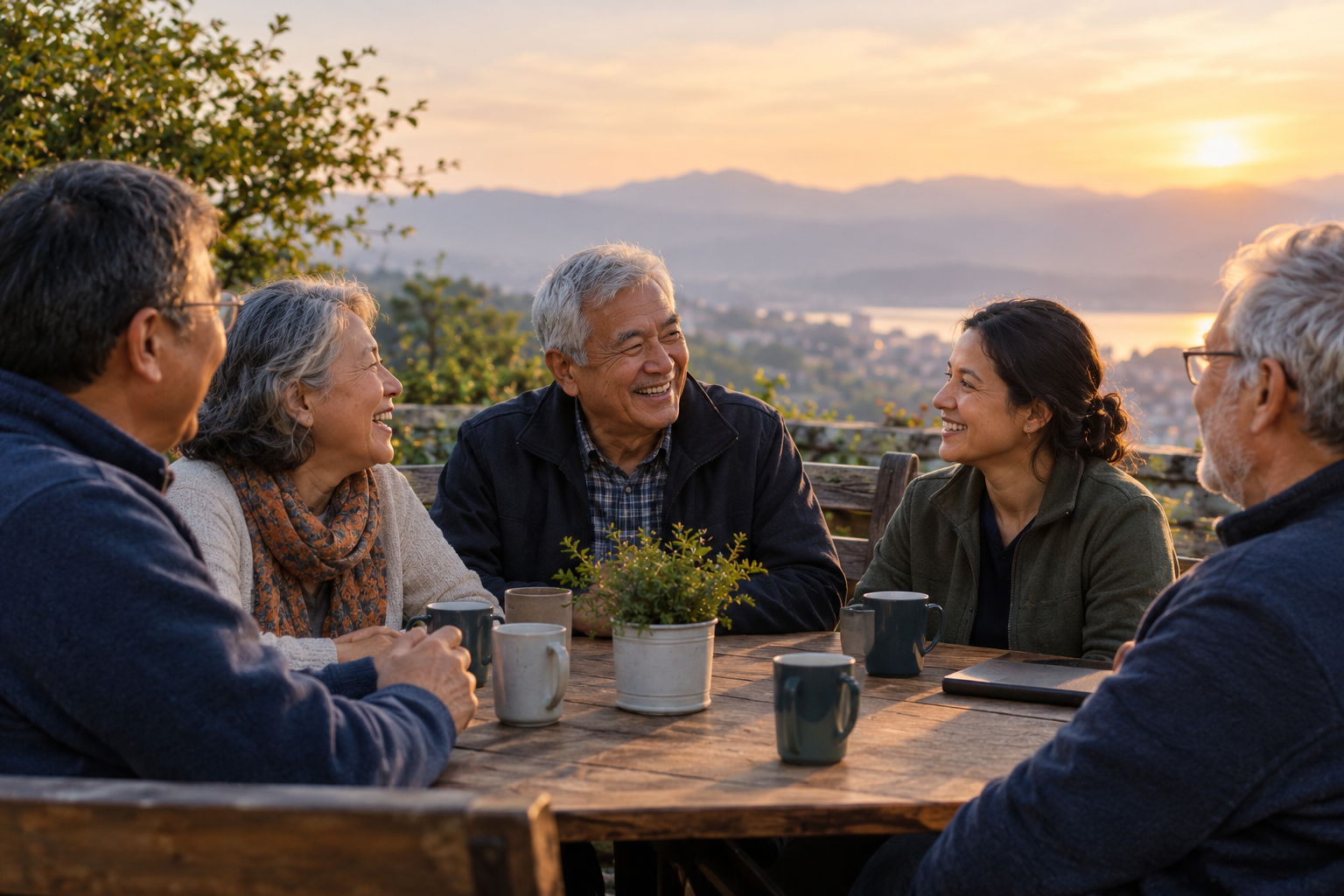
When we’re young, we tend to collect people. Friends, colleagues and acquaintances pile up the way experiences do, and a full diary seems like evidence of a full life. Few of us stop to ask which of those relationships will still matter in twenty years.
That changes gradually. Most people can’t point to the moment, but at some stage they find they would rather have dinner with three old friends than spend an evening at a party of fifty. A phone call from a sibling starts to mean more than an invitation to an event. The people who knew us before we had achieved very much become the ones we most want to spend time with.
Stanford psychologist Laura Carstensen has studied this shift for decades. Her research suggests that as we become more aware that our time is limited, we put less effort into relationships that might pay off later and more into the ones that feel meaningful now. Younger people tend to look for novelty and new information, while older people look for depth and emotional closeness. Our social circles get smaller, but the relationships inside them usually get stronger.
Getting older also takes away some of the pressure that used to shape our social lives. Earlier on, many of us keep up friendships out of obligation, professional ambition or a fear of being left out. As those reasons matter less, it becomes easier to let some relationships fade and to be honest with ourselves about who we actually want to see.
The purpose of community changes too. In our twenties and thirties, a network often works like a ladder, helping us find jobs, build a reputation and move forward. Later on, many people find more satisfaction in looking after something than in getting something from it. They mentor a younger colleague, volunteer at a local charity, help raise grandchildren, or take on the committee role nobody else wanted. Being needed by others is one of the more reliable sources of contentment in later life.
There is good evidence behind this. The Harvard Study of Adult Development has followed the same group of people since 1938. One of its clearest findings is that the quality of people’s relationships predicts how healthy and happy they are as they age, and it does so more strongly than wealth or social status. Loneliness in later life, on the other hand, has been linked to poorer physical and mental health. Keeping up our friendships belongs on the same list as daily walks and regular check-ups.
If we value community differently as we get older, it makes sense to look after it differently as well. The first step is to make an effort with the people who matter most, without waiting for a birthday or a crisis to get in touch. A short message on an ordinary weekday is often appreciated more than a card at Christmas.
It’s also worth keeping the door open to new people. A smaller circle can easily become a closed one, and friendships with people of different ages keep us curious about the world. Younger friends benefit too, because they gain a perspective that only comes from having lived longer.
Joining something where we are expected to turn up helps as well, whether that’s a choir, a walking group, a board or a weekly volunteering shift. Belonging tends to grow fastest where we have a clear part to play and other people notice when we’re missing.
Finally, long friendships last when people are generous with each other. Most of us are carrying at least one old grievance that has cost more in lost years than it was ever worth, and later life is a good time to put it down.
How we age depends on our bodies and our minds, and also on the people around us: the ones we choose to keep close and the ones we allow to look after us. The circle will probably get smaller over time. If we look after it, it can still be the most valuable thing we have.