Why Strength Training Becomes More Important as We Get Older

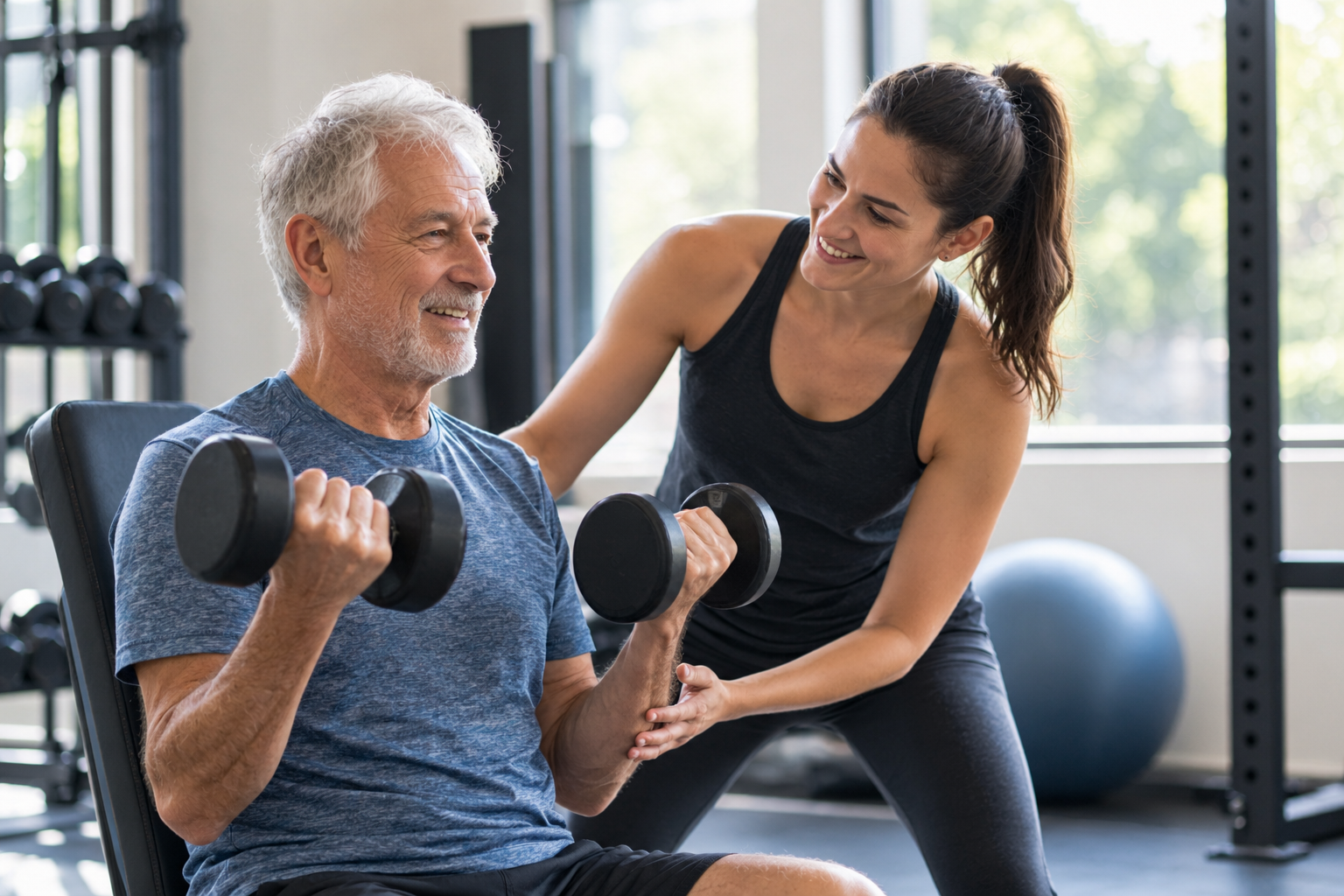
For a long time, exercise after a certain age seemed to mean walking, swimming or something described as “gentle.” Lifting weights belonged to younger people in gyms, usually surrounded by mirrors and considerably more enthusiasm for protein shakes.
That view is changing. One of the more interesting developments in the way we think about ageing is the growing attention being paid to strength, not for appearance or athletic performance, but for something much more ordinary: remaining able to do things for yourself.
The National Institute on Aging reports that around 30% of adults over 70 have difficulty with basic movements such as walking, getting out of a chair or climbing stairs. Muscle mass and strength generally peak around the ages of 30 to 35 and then decline, with the loss of muscle power and performance accelerating later in life.
It is easy to think of losing strength as one of those unavoidable parts of getting older. To some extent it is. A 70-year-old body is not going to respond in exactly the same way as a 30-year-old one. But the interesting part is how much influence we can still have over the process. Research supported by the National Institute on Aging has found that strength training can help older adults maintain muscle mass, improve mobility and remain independent for longer.
This changes the purpose of going to the gym. The objective does not have to be lifting an impressive amount of weight. It can be having enough strength to put a suitcase into an overhead compartment, carry groceries, get up easily from a low chair or climb a flight of stairs without thinking about it. These are small things until they become difficult.
We tend to notice physical fitness when it is exceptional. We notice the person running a marathon at 70 or someone considerably older who is still playing competitive sport. Everyday strength attracts much less attention because there is nothing remarkable about someone carrying their own bags or getting up from the floor. In many ways, that is exactly the point. The best result of maintaining strength may be that ordinary life continues to feel ordinary.
There is also something encouraging about strength training because improvement remains possible later in life. Resistance training does not have to mean heavy barbells. It includes machines, dumbbells, resistance bands and exercises using your own body weight. The National Institute on Aging notes that gradual increases in resistance can make muscles stronger and help maintain the physical abilities needed for everyday activities.
Walking remains excellent exercise, and there are many good reasons to keep doing it. But walking and strength training do different things. Researchers studying ageing have found that combining walking with resistance training can be particularly useful for maintaining physical function. That distinction is worth knowing because many people who consider themselves active may still do very little that asks their muscles to become stronger.
There is a wider point here about the way we prepare for later life. We are accustomed to thinking ahead financially. People save for retirement, make investments and think about whether they will have enough resources to maintain the life they want. Physical independence deserves some of the same forward planning.
Muscle is an unusual asset because you cannot simply decide you need it on the day it becomes important. It has to be maintained, challenged and rebuilt over time. The return is not measured by how much weight is on the bar, but by how much of your own life you can continue to manage without assistance.
That makes strength training look rather different. It is less about becoming stronger than other people and more about keeping enough strength for yourself.
There are not many investments where being able to get out of a chair comfortably counts as a good return.
This may be one of them.