Innovation Begins With How We See the World

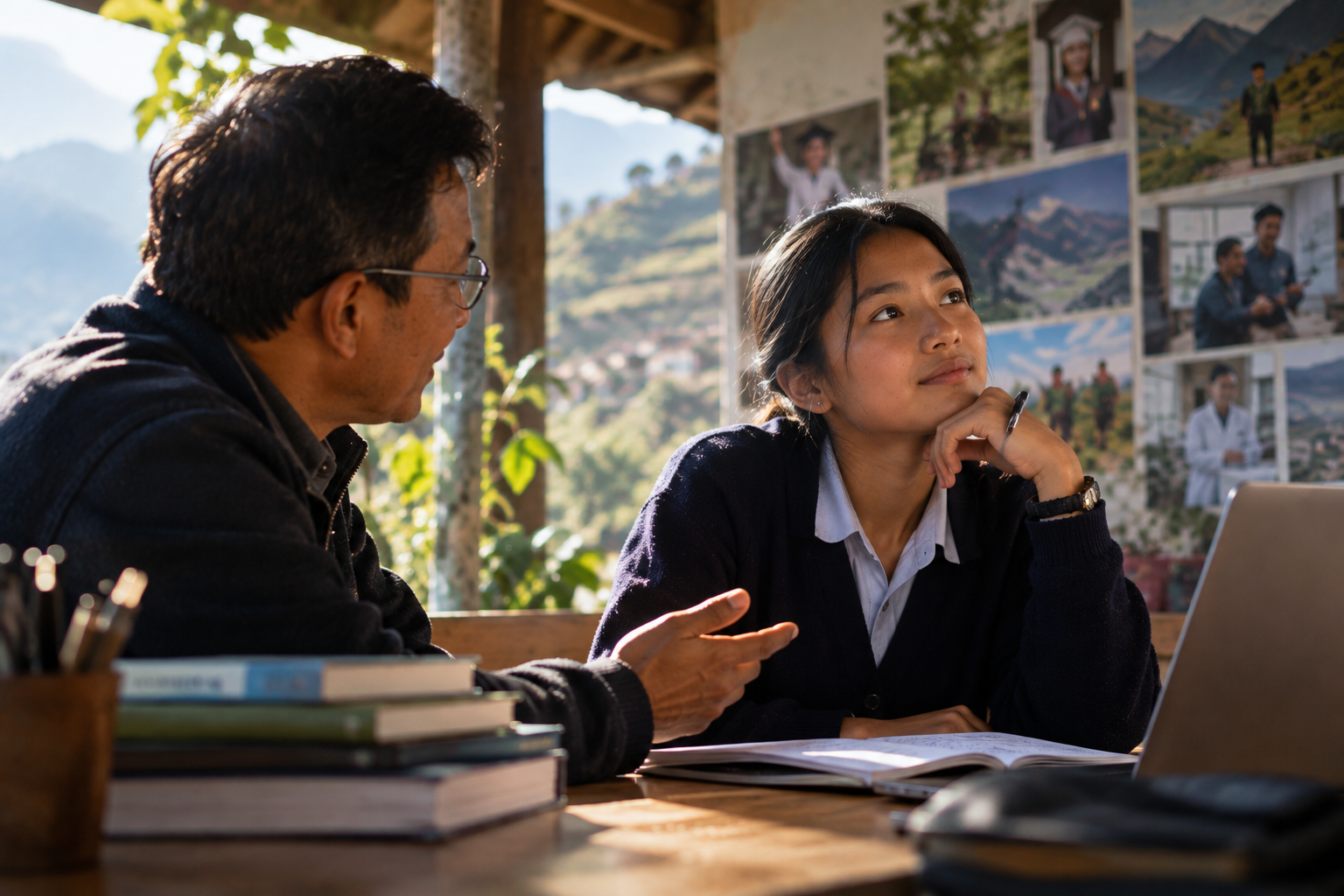
When we hear the word innovation, we tend to think about what is new: artificial intelligence, scientific breakthroughs, new businesses or technologies that promise to change how we live. But I have always been more interested in what comes before the innovation itself. Before something new can be created, somebody has to look at the world as it is and imagine that it could work differently.
That ability begins with curiosity. It means remaining interested in unfamiliar ideas, seeking out people whose experiences differ from our own and being prepared to question assumptions we may have carried for years. Experience can give us confidence in what we know, but it can also make it easier to rely on familiar ways of thinking. The challenge is to accumulate experience without losing the openness that allows us to see something differently.
We are living through a period when that openness matters enormously. Artificial intelligence is changing how we access information, scientific advances are altering our understanding of health and longevity, and technology continues to reshape how we communicate, work and learn. Faced with change on this scale, it is tempting to focus on predicting which technology will succeed next. I think the more interesting question is what these changes allow us to see and do that we could not before.
Education has shaped much of my thinking about this. When I began supporting students from mainland China in the 1990s, studying overseas was still beyond the reach of many talented young people. The purpose was not simply to provide a qualification from a prestigious university. It was to give students access to different cultures, expectations, people and ideas, and in doing so broaden their sense of what might be possible in their own lives.
Over the years, I have seen how powerful that change in perspective can be. Scholars have gone on to build businesses, contribute to technological innovation and take leadership roles internationally. Others have supported students themselves, extending opportunities to another generation. Their paths were not prescribed when they received a scholarship; the value of the opportunity was that it gave them more directions in which they could travel.
That experience has influenced how I think about innovation more broadly. We often measure an idea by the immediate problem it solves, but the most interesting ideas can have consequences that were never part of the original plan. An educational opportunity can influence not only one student's career but the people they later mentor. A new technology can begin by making an existing task easier and eventually enable an entirely new way of working. Innovation creates value when it expands the range of possibilities available to other people.
This is one reason I am interested in artificial intelligence. Much of the current conversation focuses on what AI will replace: which tasks will disappear, which jobs will change and which activities machines will perform better than people. Those questions are important, but they capture only one side of innovation. History suggests that the more interesting effects of a new technology often come from the things people eventually do with it that were difficult to imagine at the beginning.
For young people, this makes curiosity and judgment increasingly important. When information was difficult to obtain, education understandably placed enormous value on acquiring knowledge. Today, answers can appear on a screen almost instantly. Knowledge still matters, but so does knowing what to do with it: how to ask a better question, test an assumption, recognize when an answer is incomplete and connect ideas that initially seem unrelated.
Innovation therefore depends on more than technology. It also depends on exposure. Travelling somewhere unfamiliar, encountering another culture, reading outside our usual interests or speaking to someone from a different generation can alter how we understand a problem. We cannot know in advance which experience will change our thinking, which is precisely why remaining open to them matters.
There is a paradox here. Technology has given us access to more of the world than any previous generation, yet it has also become remarkably good at giving us more of what we already know and like. Algorithms learn our preferences, our interests and our habits. They make life more convenient, but convenience can narrow our field of vision if we never deliberately look beyond what is placed in front of us.
For me, this is where education and innovation ultimately meet. A good education should equip someone to succeed in the world they enter, but a great education should also give them the confidence to question that world. It should expose young people to enough ideas and experiences that they can imagine alternatives rather than simply accepting the choices already available to them.
None of us knows which technologies will define the next twenty years, just as previous generations could not fully anticipate the world we inhabit today. Preparing young people for that future therefore cannot mean giving them a fixed map of what lies ahead. It means developing the curiosity to explore unfamiliar territory, the judgment to decide which paths are worth following and the confidence to create a path when one does not yet exist.
That, to me, is the deeper meaning of innovation. It is not simply the arrival of something new. Innovation begins when we learn to see the world differently, because seeing a different possibility is the first step towards creating one.